
Dental Implants
Are you missing one tooth, several teeth or all your teeth? Dental implants may offer a way to replace missing teeth or improve the stability of a denture. Your treatment is planned following a clinical examination, a review of the necessary imaging and a discussion of your needs and expectations.
At Slodent Dental Centre in Belgrade, we combine many years of experience in implant dentistry with digital workflows for planning and fabricating dental restorations. We connect clinical practice with scientific research, carefully selecting methods suited to each patient’s needs.
What is a dental implant?
A dental implant is a replacement placed in the jawbone to replace the root of a missing tooth. It is usually made of titanium or its alloys, which have good biocompatibility. As it integrates with the surrounding bone, the implant becomes a support for a crown, bridge or denture.


Indications and treatment planning
Implants can be used to replace one tooth, several teeth or all the teeth. They can support fixed restorations or improve the stability of removable dentures. The type of restoration and the number and positions of the implants are determined by the clinical conditions and the treatment plan.
Planning includes assessing the available bone, soft tissues and the position of the future dental restoration. At this stage, digital tools help us consider how the future teeth will look, function and be maintained. View an example of digital smile planning in a photograph and through a video simulation while speaking and smiling.
We use an intraoral scanner to create a digital representation of the teeth and surrounding tissues. These digital records support prosthetic planning and collaboration with the dental laboratory.
When a tooth needs to be removed, we take particular care to minimise trauma and preserve the surrounding tissues. Where indicated, socket preservation or bone augmentation may be performed. Bone augmentation may be carried out before or at the same time as implant placement, depending on the clinical conditions.
Assessing suitability for treatment
Before implant placement, we assess your general health, the medicines you take, the health of your teeth and gums, the available bone and any other factors that may affect treatment.
Some medical conditions and treatments require additional preparation or consultation with your doctor. In certain situations, implant placement may need to be postponed or another option considered. Please tell us about all your medical conditions, medicines and previous treatment.
Preparation and recovery
Following a clinical examination and a review of the necessary imaging, we will explain the proposed treatment, alternatives, materials and implant system, as well as the expected course of care. We adapt the treatment to your individual circumstances, drawing on clinical experience and current scientific evidence.
You will receive instructions on cleaning your teeth and implants, together with a plan for regular check-ups and professional maintenance.
Smoking increases the risk of complications and implant treatment failure. We recommend stopping smoking and discussing support to help you quit.
Where necessary, we will coordinate your preparation for the procedure with your doctor.
Recovery depends on the extent of the procedure. You will receive written instructions on care after surgery, prescribed medication and follow-up appointments, including when to contact us.
The restorative phase
The timing of the restoration depends on the implant's initial stability, the condition of the bone, any additional procedures and the planned treatment protocol. We will explain the expected sequence and timing of treatment during the planning stage.
Tooth extraction, implant placement and a temporary restoration
In most cases in our practice, we use an approach that combines tooth extraction, immediate implant placement and fitting a temporary restoration shortly after the procedure. This corresponds to the Type 1A protocol in the ITI classification and involves planning the surgical and restorative phases together.
We assess suitability for this approach through a clinical examination, imaging and evaluation of the tissues. The final decision on immediate provision of a temporary restoration depends on the stability achieved during implant placement. When the conditions are not suitable, we carry out treatment in separate stages.
The temporary restoration forms part of treatment during healing. After assessing healing and tissue stability, we proceed with the definitive dental restoration.
Readiness for the restorative phase is assessed clinically, with appropriate radiographic review. In a two-stage procedure, the implant is uncovered and a healing abutment is fitted to shape the soft tissue.
After adequate healing, we carry out an intraoral scan and proceed with the definitive restoration. The digital scan provides the basis for its design, with careful attention to tooth shape, the bite and the relationship with the surrounding tissues.
Intraoral scanning and digital planning
Intraoral scanning creates a three-dimensional model of the teeth, surrounding tissues and bite — a basis for analysing and planning future dental restorations.
Using suitable software and other diagnostic records, we assess the available space, the shape and position of the future teeth and their relationship to the opposing teeth.
Coordinated treatment planning
For implant treatment, scan data can be combined with a CBCT scan where needed. We plan implant positions around the future restoration and available bone, considering the surgical and prosthetic stages together.
From plan to restoration
Digital records connect the practice and dental laboratory during the planning and fabrication of temporary and definitive restorations. We assess the plan against clinical findings, function, aesthetics and access for oral hygiene.
Digital Smile Design
We consider the shape and position of future teeth in relation to the face, lips, speech and smile. Photographs and video recordings complement the scanned model, helping us assess tooth proportions and visibility.
You can preview the proposed appearance in a photograph and video simulation. Together, we discuss your expectations and possible adjustments, balancing aesthetic preferences with functional and biological requirements.
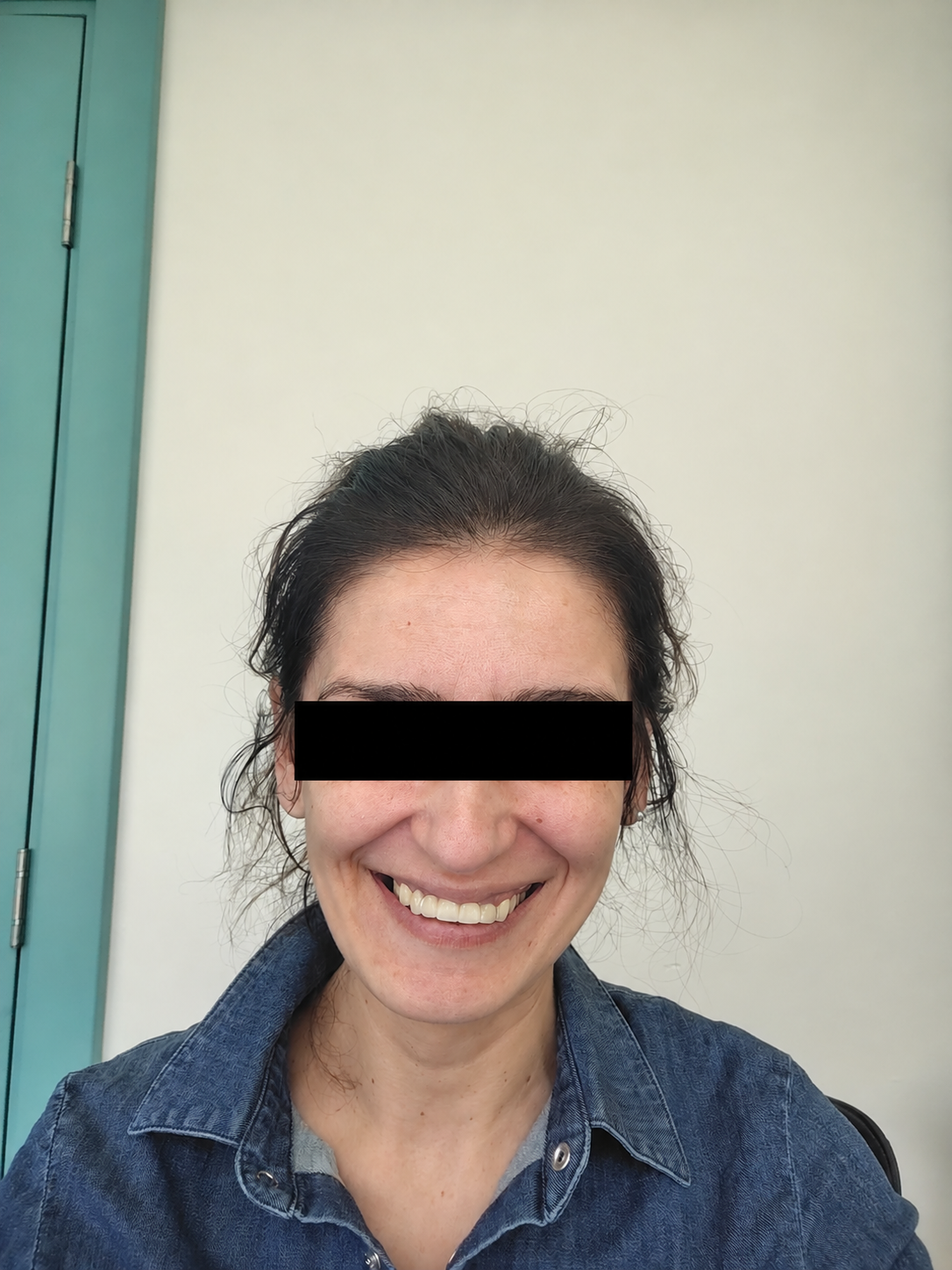
Before and after
Results


Single tooth replacement
A single tooth was replaced in a 28-year-old patient who had sustained a vertical root fracture in a sports injury. Tooth extraction, implant placement and reconstruction of the hard and soft tissues were performed during the same visit. A temporary crown was made the following day, and the definitive ceramic crown was fitted three months later.
Have a Question or Wish to Book an Appointment?
Email us at sr.tnedols@eciffo or call us on +381 65 3553 088.